Mental Health Matters: Healthy Teams, Healthy Systems, and Preventing MSP Burnout
Written by Michelle Wong - Marketing Specialist
May is Mental Health Month, which makes it the perfect time to talk about something that often gets pushed to the bottom of the priority list in IT and managed services.
The humans behind the keyboards.
At Comet Backup, we spend a lot of time thinking about protection, resilience, and recovery. Turns out those ideas apply to people too.
We have built small wellness habits into our week, like sharing quick tips during our Friday all-hands and keeping a Slack channel full of everything from healthy recipes to reminders to log off and go outside once in a while. Nothing revolutionary. Just simple ways to keep the conversation about workplace wellbeing going.
So what is Mental Health Awareness really?
It is not just posters and corporate emails telling everyone to “prioritize wellbeing.”
It is about recognizing that mental health matters just as much as physical health. It is also about making it normal to say:
- “I’m overloaded today.”
- “Can someone give me a hand with this?”
- “I need a break, I’ve been staring at the screen for too long.”
Mental health conversations are important because burnout rarely appears overnight. It builds slowly through stress, pressure, and constantly running at full capacity without enough time to recover.
And in IT, that can happen faster than most people realize.
Why burnout hits MSPs and IT teams particularly hard
Let’s be honest, this industry can be intense.
If you work in IT or managed services, some of these probably sound familiar:
- Always on-call because systems do not care what time it is
- Constant firefighting where solving one issue reveals three more
- Client pressure and urgent requests landing at the same time
- Remote work or solo roles that can feel isolating
- The endless sea of tickets in the queue
It is rewarding work, but it can also quietly wear people down over time.
Burnout in MSP and IT environments often looks like:
- Feeling mentally exhausted before the day even starts
- Struggling to switch off after work
- Losing patience faster than usual
- Making simple mistakes from fatigue
- Feeling like every alert triggers instant stress
That is why protecting mental health at work is not just a “nice to have.” It directly affects team wellbeing, performance, and long-term sustainability.
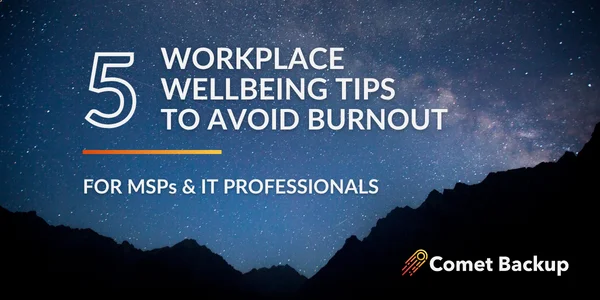
5 realistic ways MSPs can reduce stress and avoid burnout
No vague “just relax more” advice here. These are practical habits that actually help in busy IT environments.
1. Set boundaries between “online” and “always available”
One of the fastest paths to burnout is feeling like you can never fully disconnect.
Not every issue is a 2am emergency. Define after-hours expectations clearly with both clients and your team. Protecting your personal time is important.
2. Take small breaks before your brain forces you to
Micro-breaks matter more than people think. Even short pauses help reduce stress and reset focus.
Use a timer, like Pomodoro or breaktimer.app, to remind yourself to stretch, hydrate or get a cup of tea, or take a few minutes to look away from the screen (all screens, including the small screen).
3. Automate repetitive work wherever possible
Doing the same manual tasks every day drains mental energy fast.
If something keeps repeating, automate it, document it, or simplify it. Reducing repetitive workload helps lower cognitive overload and gives your team more breathing room.
4. Check in with humans, not just tickets
Make it normal to check in and have a friendly chat with coworkers—not just about tickets or projects, but about how they’re doing.
A culture of openness leads to earlier support and less stigma.
5. Move Your Body
It is easy for conversations in IT teams to become entirely task-focused.
- “Any updates?”
- “What is the ETA?”
- Did the backup complete?”
Sometimes a simple “How are you going?” matters more.
Open conversations help reduce isolation and make it easier for people to speak up before stress becomes burnout.

A few helpful resources
If you want to learn more about workplace wellbeing, stress management, or burnout prevention, these are worth bookmarking:
- Channel Pro Network – How Can An MSP Manage Workloads To Prevent Employee Burnout?
- Headspace – Managing Workplace Stress and Burnout
- Calm - Best Mental Health Apps for Workplace Well-Being